


I wanted to take a moment to reach out to all of my free subscribers and thank you for taking a peek inside the studio!
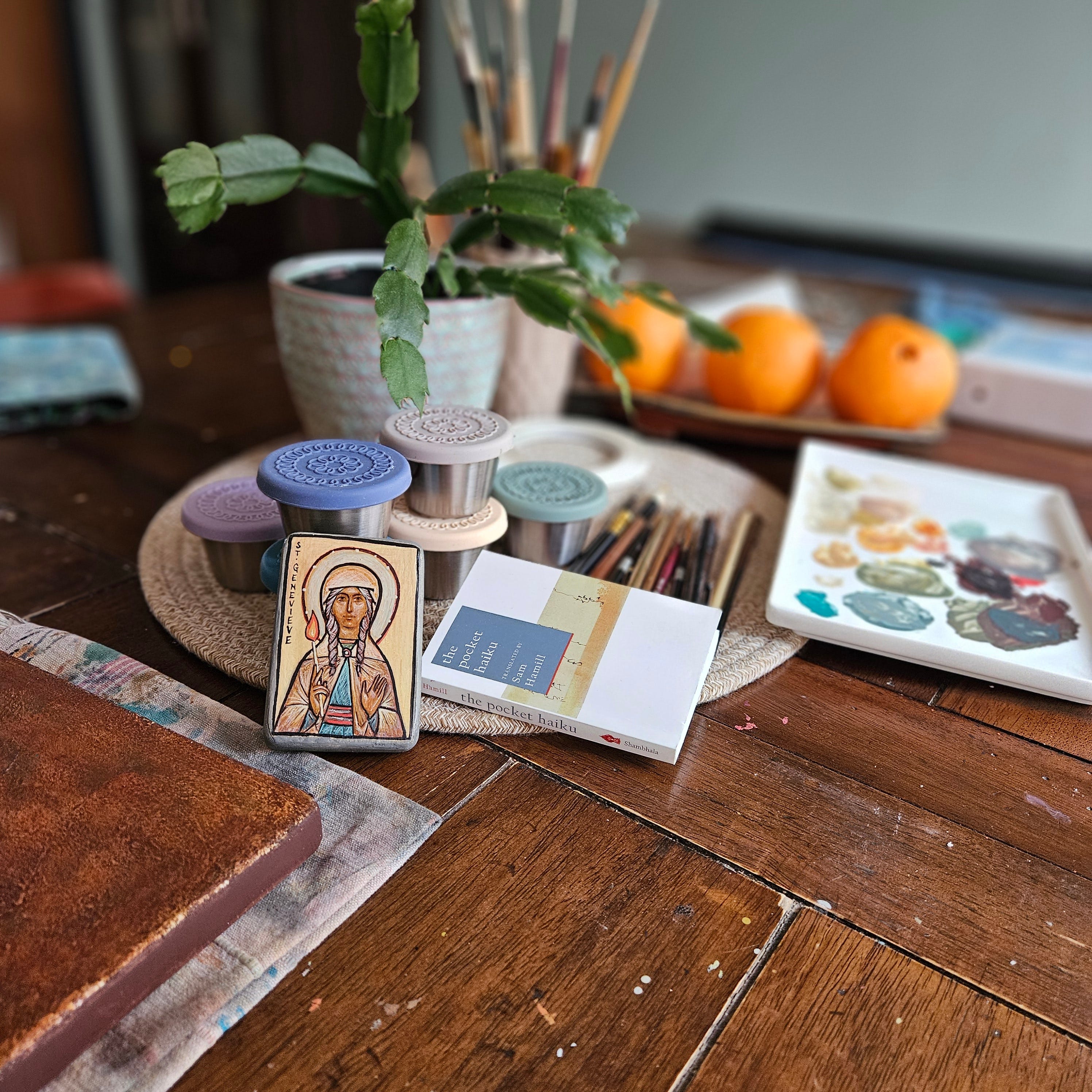
As you can see, it's not much. I do as much as I can with as little as I can, and I do it all between doing my best to love my wife, raise and educate my children.
Some of you are brand new and others have been around for a while. Regardless of when you got here, here's a bit of what Saintly Folk is all about.
My work is ultimately a service of Christ and the Church. Icons are an important part of the Orthodox faith and especially helpful toward encouraging and building up a life of prayer. It's one of the oldest and organic ministries, and one of the many ways for certain faithful to embody the Orthodox Christianity.
Being an iconographer is a lot like cooking, actually. Preparing a good meal for heart. I cook almost all the meals in our house. It's another creative outlet and helps me connect with my grandma, who died after suffering lymph node cancer about twenty years ago. Although I occasionally have some frozen chicken nuggets and such for the busy days (and the days when I'm not feeling well), you otherwise won't find ready to eat meals or TV dinners in our house.
I think most folks know such food hardly qualifies as such, and yet we eat it. This confusion over what is quality food is similar to the modern ailment I hope to address through Saintly Folk: aesthetic blindness.
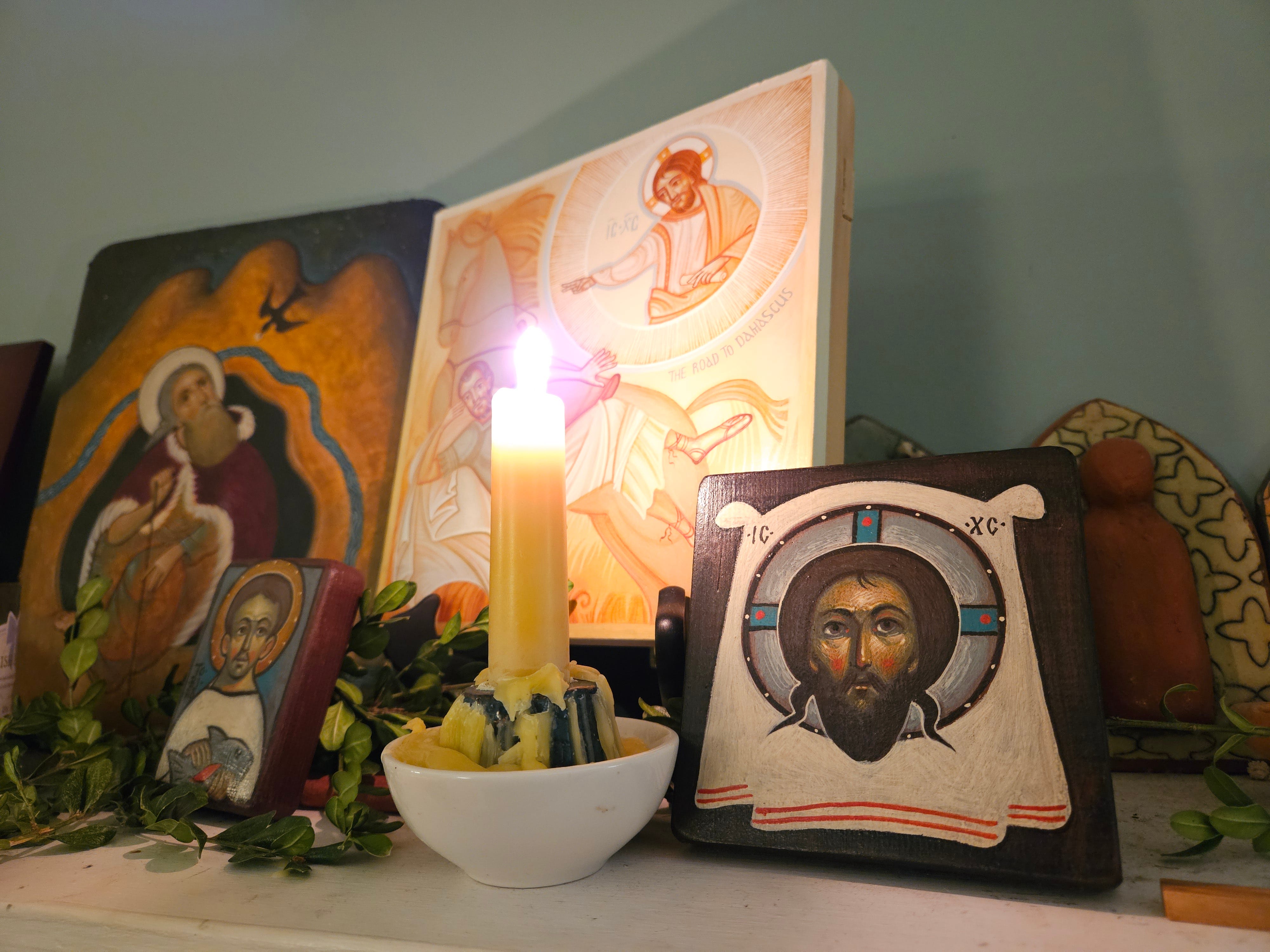
Aesthetic blindness is the inability to discern art from sham. When it comes to the art of iconography, this usually looks like the inability to discern why it's completely inappropriate to reproduce ancient icons from Constantinople for use in prayer corners and mission parishes. There is no recognition that no faith is required to produce these shams, and the subjects--our venerable saints who protect us with their mighty prayers--suffer a lack of the honor due to them.
I'll be writing more about the icon sham business (not a ministry) in future paid subscriber articles.
Whats important to know for now is that there are iconographers living and working in the present who are concerned with preparing proper meals for you--I'm one of them. We don't want people to keep eating slop when they can have satisfying meals. This is what it means to produce organic iconography.
I believe people will eventually come around to what's aesthetically good for them. The difference between owning sham and owning hand painted icons is one of those things that is difficult to explain until you actually own one (or make one, perhaps). I don't think I am alone in saying that there is a nearness experience when praying with an organic icon that is not the same as when praying with a sham.
I'll give an example. A few years ago I visited the national gallery in Washington DC. They have a decent collection of sacred art, including a 13th century icon of the Mother of God that may have been from Constantinople.
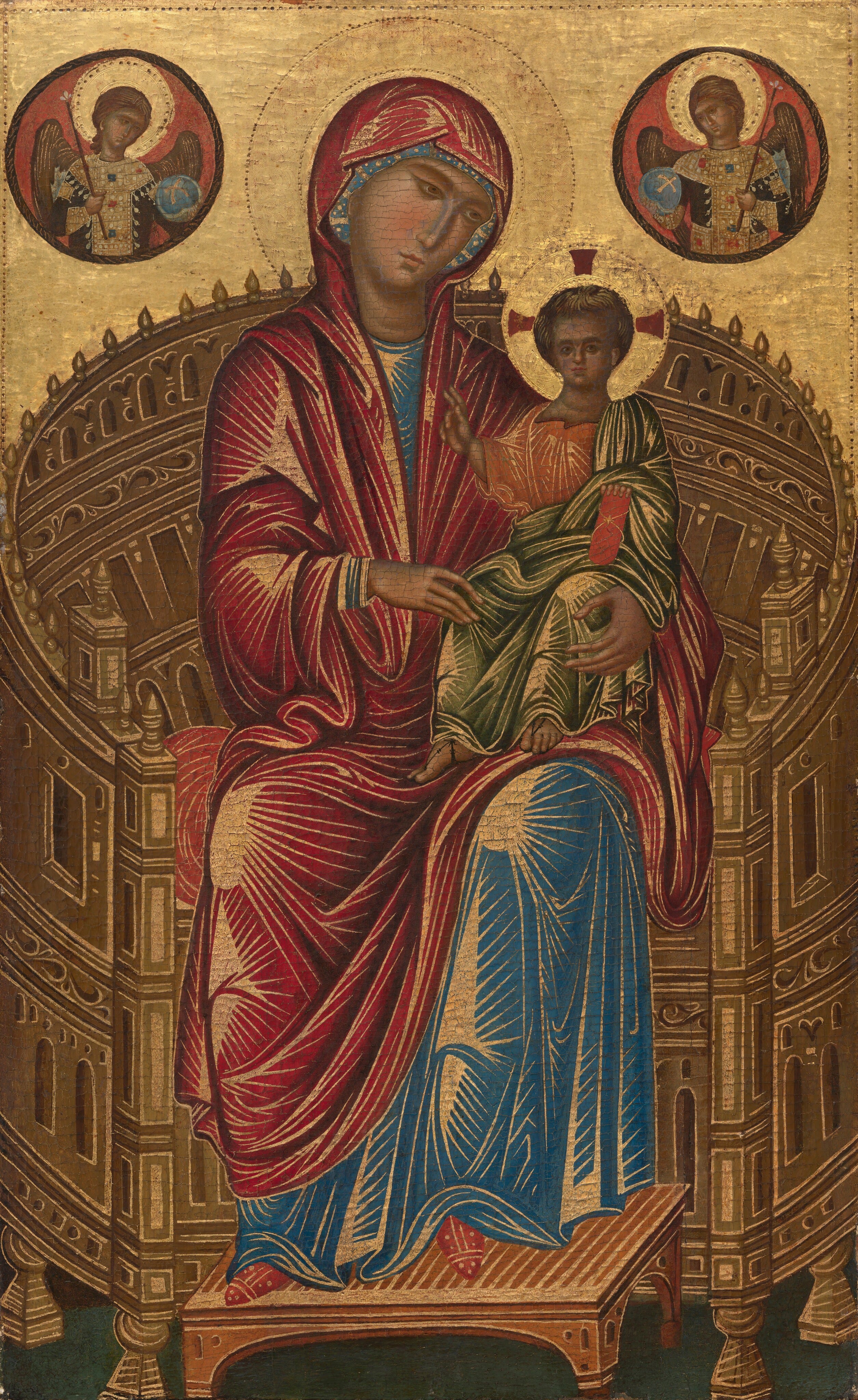
My instinct upon first seeing this icon in person was to kiss it. It felt so unnatural to encounter it in the National Gallery. Nevertheless, I had a special experience with Our Lady and Our Lord.
There is a parish where I've prayed a number of times that has a large print replica of this icon. The trouble is that I've seen the real thing. So when I've prostrated or bowed before the replica, I was taken back to that first experience of encountering the original, organic icon. My veneration became artificially simulated and distracting. It's not that I doubt Our Lord and Lady have received due reverence through my veneration of that print. Rather, I doubt the helpfulness of that particular version and the simulated experience as being as beneficial as my encounter with the organic version.
In summary, I want as many people to have the experience of nearness to Christ and the Saints through icons as I have experienced with organic icons. Saintly Folk is helping me to that by offering a Founding Member subscription that gives subscribers a hand painted Mandylion. They also get, along with annual and monthly subscribers, discounts on commissions and icons from the studio and ink drawings and preliminary work (and more to come!). All of this along with regular posts taking readers inside my own creative process in producing these works.
I'm looking forward to getting know all of you a bit more--or as much as one can at this digital distance. Leave a comment or reply to this email and let me know the name of your patron saint. Maybe they'll pop up in the studio and future posts!