


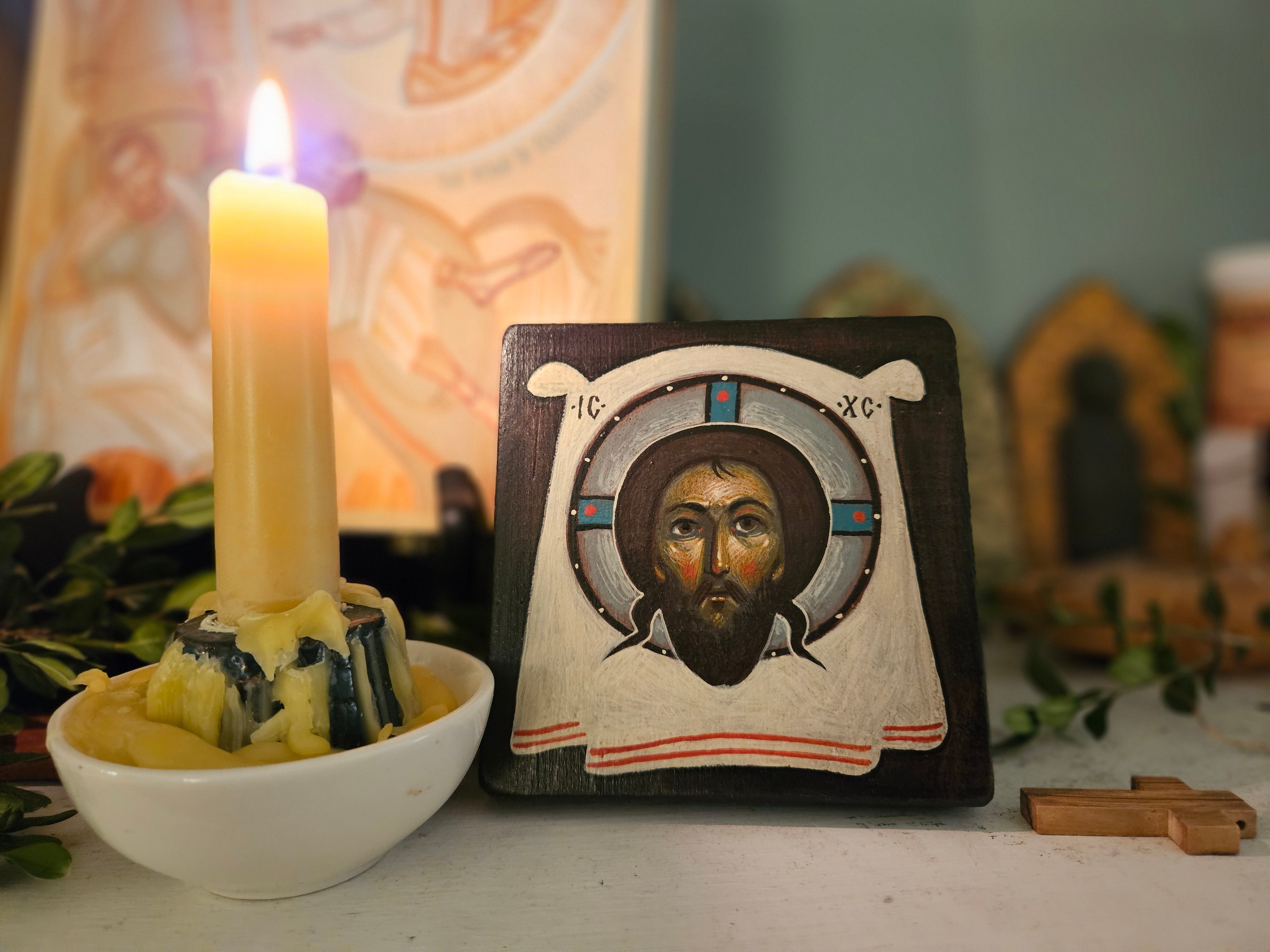
My work begins with a piece of reclaimed wood, cut to size, and a base coat of paint. The colors I choose for the base coat will vary. Lately, I've been drawing inspiration from the local landscape and atmosphere.

A couple weeks ago I was cooking a cabbage roll soup to clear out the remaining meat before Meatfare. I forgot to pick up a couple cans of roasted tomatoes, so I made a quick run to the nearby Ingles. It's a five-minute drive in rural Western North Carolina through somewhat marshy farmland.
The weather was still quite cold and had been raining that day, and there were a few remnants of snow and ice littering the shadows of the open pastures. The overcast sky was a cadet grey-blue. The green grass was nearly teal under this light, with spots of gold hay and dry weeds. The trees had become earthen violet silhouettes against the sky. The clouds were warm, but managed to blend into the greys and blues and purples of the mountain-guardians of my home.
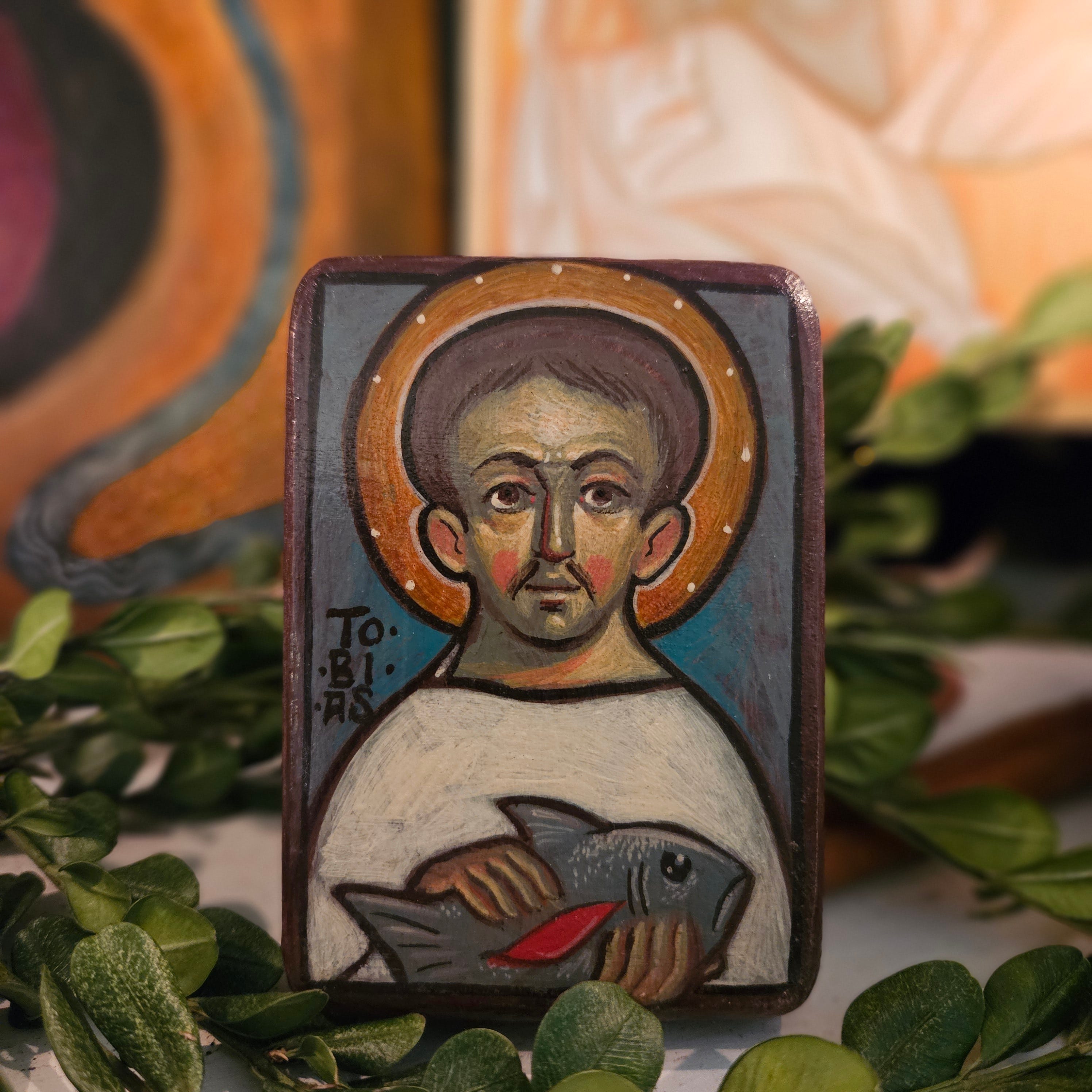
I tried my best to pull these colors together for a palette and had some early success with my work on a miniature icon of St Tobias:
I immediately knew I wanted to go in this direction again with a Mandylion icon for a new Saintly Folk Founding Member (who has been a great encouragement to me, by the way).
After applying the base coat, I usually paint silhouettes of the basic shapes. The Mandylion composition is essentially two concentric circles framed by a rectangular form: the mandylion.

For those unfamiliar, the term “mandylion” comes from the Greek word that can mean “towel” or “handkerchief”. It’s considered the earliest icon by the Eastern and the Western Church. Those in the West probably most associate this icon with St Veronica who wipes the blood and sweat from Jesus’ face on the way to the cross. In the East, the image is usually associated with the conversion of King Abgar and the city of Edessa. This latter story is typically preferred by Orthodox Christians because it’s considered an “image not made by hands” and holds a special significance in ecclesial history and Tradition.